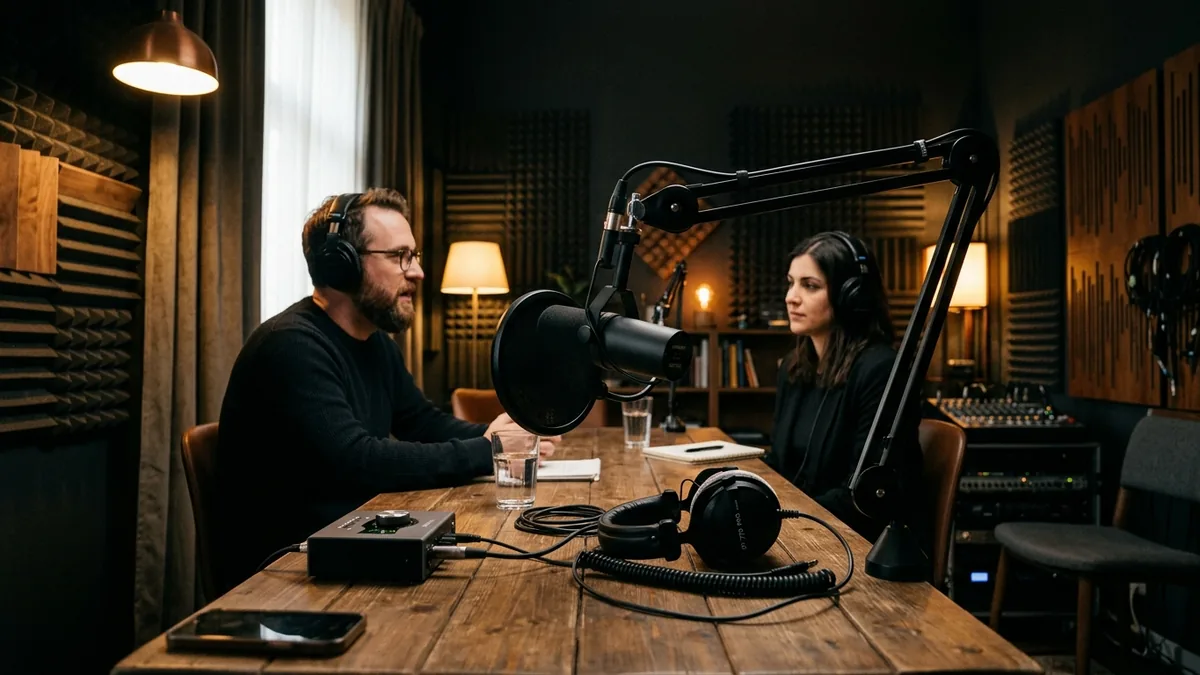
Podcasting in Britain has matured from hobby to industry. A look at where the money and the audiences are actually going.
What it tells us
In the end the podcast boom works as a kind of mirror. The enthusiasm and the unease it provokes are really about larger anxieties — over taste, money and belonging — that the culture happens to be working through in public.
Most of what is written about the podcast boom focuses on the dramatic edge cases. The version that affects most people is quieter, steadier and rarely makes the front page.
Why audiences care
The appeal of the podcast boom says as much about us as about the work. Audiences are drawn to it for reasons that have little to do with quality in the abstract: familiarity, timing, the comfort of a shared reference, the pleasure of being part of the conversation.
On the podcast boom, the loudest voices and the best-informed ones are rarely the same people.
The critics' verdict
Reaction to the podcast boom has divided in a revealing way. The split falls less between good and bad than between those judging it on its own terms and those measuring it against what came before — and both, in their way, are right.
What is clear is that the podcast boom will not resolve itself neatly. The interesting part is how the people involved adapt, and on that the evidence is only beginning to come in.
Continue reading with Starguo
You have read the free preview of this article. Subscribe for full access to our reporting, analysis and the complete archive.