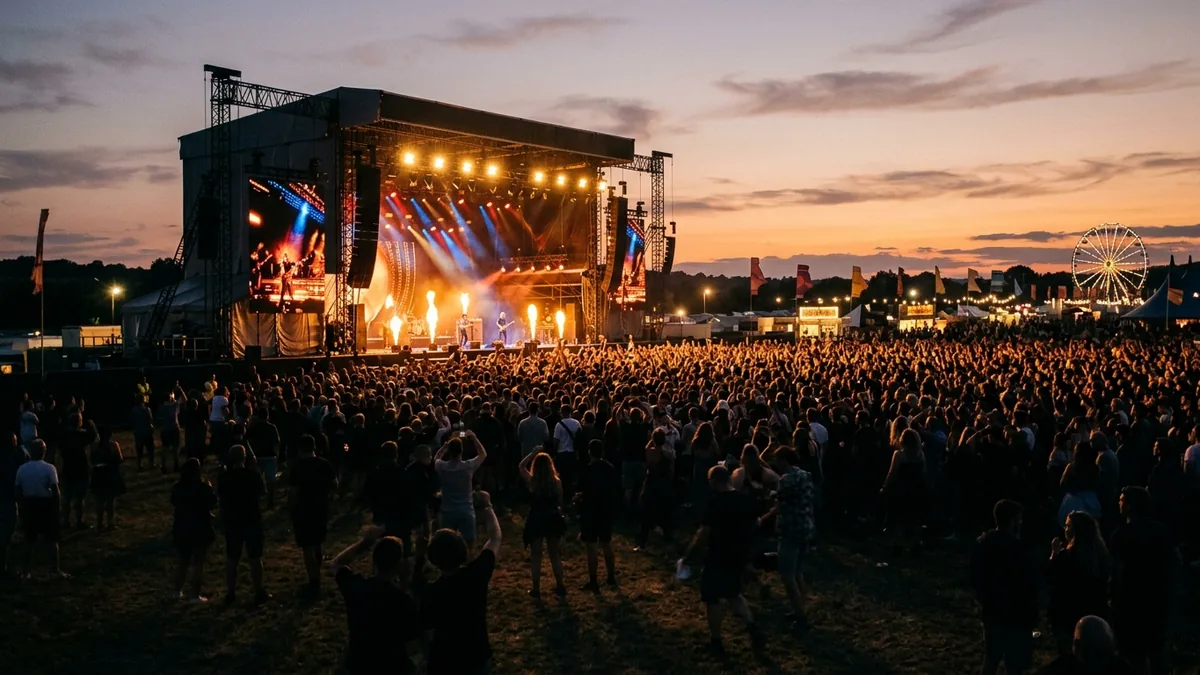
Britain's music festivals are navigating their hardest economics in years. Rising costs are reshaping who plays and who survives.
The critics' verdict
Reaction to Britain's music festivals has divided in a revealing way. The split falls less between good and bad than between those judging it on its own terms and those measuring it against what came before — and both, in their way, are right.
Britain's music festivals is moving faster than the official commentary admits, but slower than the headlines fear. The reality sits in the unglamorous middle — which is where the useful reporting lives.
The bigger picture
Britain's music festivals did not appear from nowhere. It sits at the end of a long shift in how British audiences spend their time and money, and reading it as a one-off misses the slower change underneath — the steady renegotiation of what culture we pay for and what we expect for free.
What looks like a sudden change in Britain's music festivals is usually a slow one finally becoming visible.
The money side
Behind the creative story of Britain's music festivals is a commercial one. Who funds it, who profits and who is squeezed out determines far more about what gets made than any critic does, and that calculus is shifting fast.
For now, Britain's music festivals remains a story in progress. The smart response is neither alarm nor complacency but attention — watching the quiet indicators rather than the loud ones.
Continue reading with Starguo
You have read the free preview of this article. Subscribe for full access to our reporting, analysis and the complete archive.