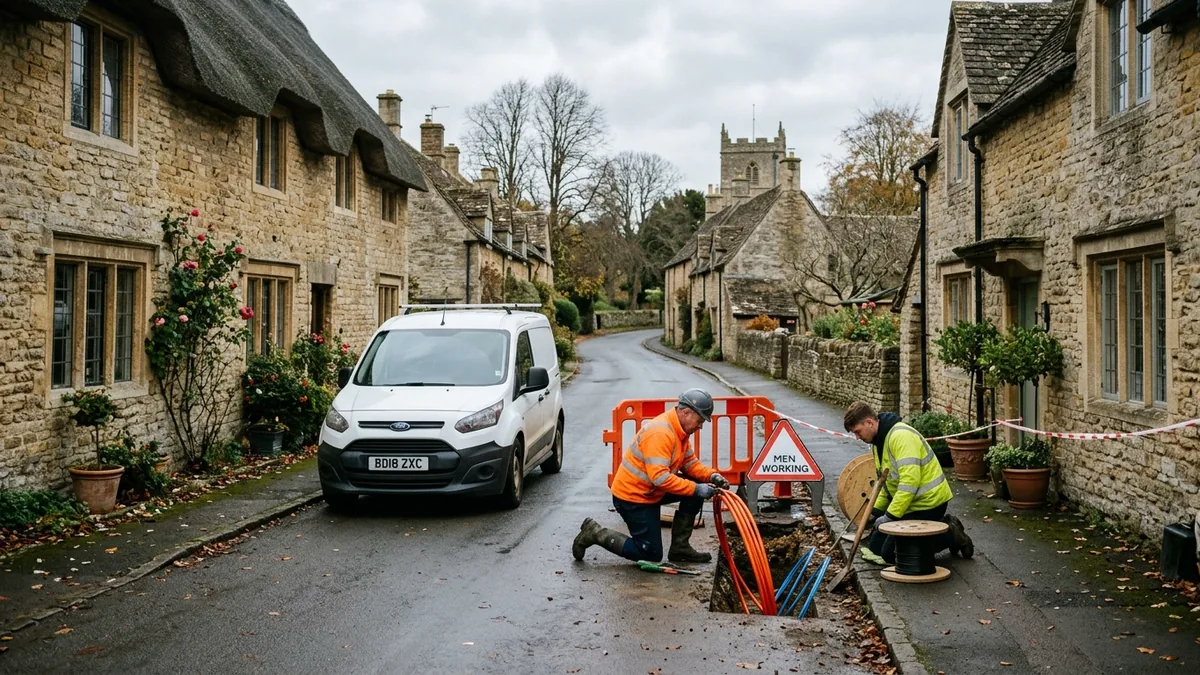
Cities raced ahead while villages waited. Why the last stretch of Britain's broadband rollout is the hardest — and most expensive.
The regulation question
Lawmakers are racing to catch up with rural broadband, and the rules being drafted will shape it more than any single launch. The risk runs both ways: too little oversight invites harm, too much freezes the experimentation that makes the technology useful.
Most of what is written about rural broadband focuses on the dramatic edge cases. The version that affects most people is quieter, steadier and rarely makes the front page.
How it actually works
The technology behind rural broadband is less mysterious than the marketing implies. Stripped to essentials it is a familiar trade-off between capability, cost and trust, and the version that wins is rarely the most advanced — it is the one people can be persuaded to rely on.
The temptation is to reach for a simple story about rural broadband. The truth is more interesting and less convenient.
Who controls it
The most important question about rural broadband is not what it can do but who owns the parts that matter. Control of the underlying platform — the data, the network, the standard — is where the long-term power and profit sit, and that is being decided now.
The honest conclusion on rural broadband is that the questions are sharper than the answers — which is exactly why it is worth following closely rather than waiting for the verdict.
Continue reading with Starguo
You have read the free preview of this article. Subscribe for full access to our reporting, analysis and the complete archive.